
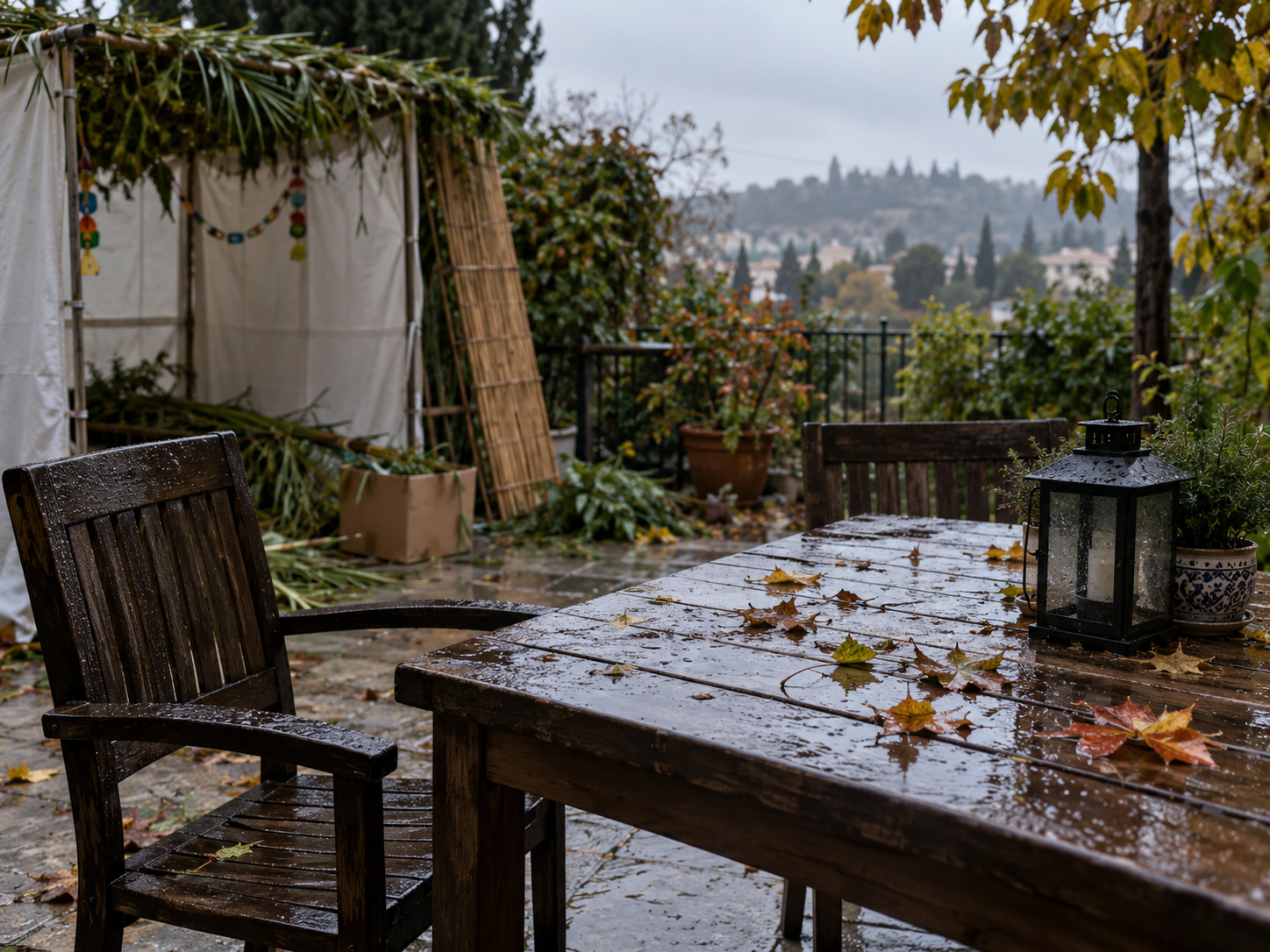
There is a very Jewish instinct buried inside Shemini Atzeret: we do not always know how to leave. The meal is over, the plates are being cleared, somebody has already put their coat on, and yet somehow another conversation starts in the hallway and twenty minutes later nobody has gone anywhere. Shemini Atzeret feels a little like that. Sukkot is finished, the seven days are complete, and yet the Torah gives us one more day. The rabbis imagine HaShem saying to Israel, “Your departure is difficult for Me. Stay with Me one more day.” Not another week. Not another great religious project. Just stay.
That is quite an intimate idea. We often think religion is about doing things: saying the right prayers, observing the right mitzvot, turning up at the right time. Shemini Atzeret is almost the opposite. There is less spectacle. The sukkah is no longer the focus. The lulav and etrog have done their job. After weeks of festivals, fasting, shofar blowing and generally trying to become better human beings, the final instruction is simply not to rush off. There is something almost reassuring in that. After all, by this stage in the Jewish calendar, many of us are probably running low on spiritual stamina and high on leftover cake.
Perhaps there are moments when HaShem does not want another performance from us. Perhaps presence itself can be a form of worship.
We are not very good at that anymore. Silence has become something to fill. Waiting has become something to avoid. If a lift takes fifteen seconds, the phone comes out. If the kettle takes too long, apparently civilisation is on the brink. We have become remarkably efficient at ensuring that almost no part of life is left unoccupied. Yet some of the most important things happen in the spaces we normally try to fill: the conversation that continues after everybody else has left, sitting quietly with someone who is grieving, remaining beside a person when there is nothing clever to say, or simply allowing ourselves to experience something without immediately photographing it, posting it, or checking whether anyone else has liked it.
Shemini Atzeret also asks us to begin praying for rain. There is something wonderfully humbling about that. We can predict the weather with satellites, track clouds across continents and receive an alert telling us that rain will begin in eleven minutes, but we still cannot command a single drop to fall. This may come as a surprise to anyone who has ever stared accusingly at a weather app because it promised sunshine. We can understand something without controlling it. That distinction is easy to forget. Modern life encourages us to believe that knowledge eventually leads to mastery. Judaism is rather more suspicious of that idea.
Perhaps that is why Shemini Atzeret comes at the end of this long season of festivals. Rosh Hashanah asks us who we are. Yom Kippur asks what we need to repair. Sukkot takes us out of our permanent homes. And then, before ordinary life resumes, Shemini Atzeret asks whether we have actually noticed any of it. It is perfectly possible to pass through an entire festival season, say every prayer, hear every sermon, eat more honey cake than was medically advisable, and emerge fundamentally unchanged.
So perhaps the question this week is not what more we should do, but what we should stop rushing away from. Which relationships deserve more time? Which conversations have we been avoiding? What have we experienced this year without really allowing it to sink in? There is a tendency to think that moving forward always means moving on. Judaism is not so sure. Sometimes we need to remain with something before we can properly leave it.
Shemini Atzeret is the extra day that technically ought not to be necessary. And perhaps that is exactly why it is.
Sometimes the important part happens after we thought we were finished.
Chag Sameach.