
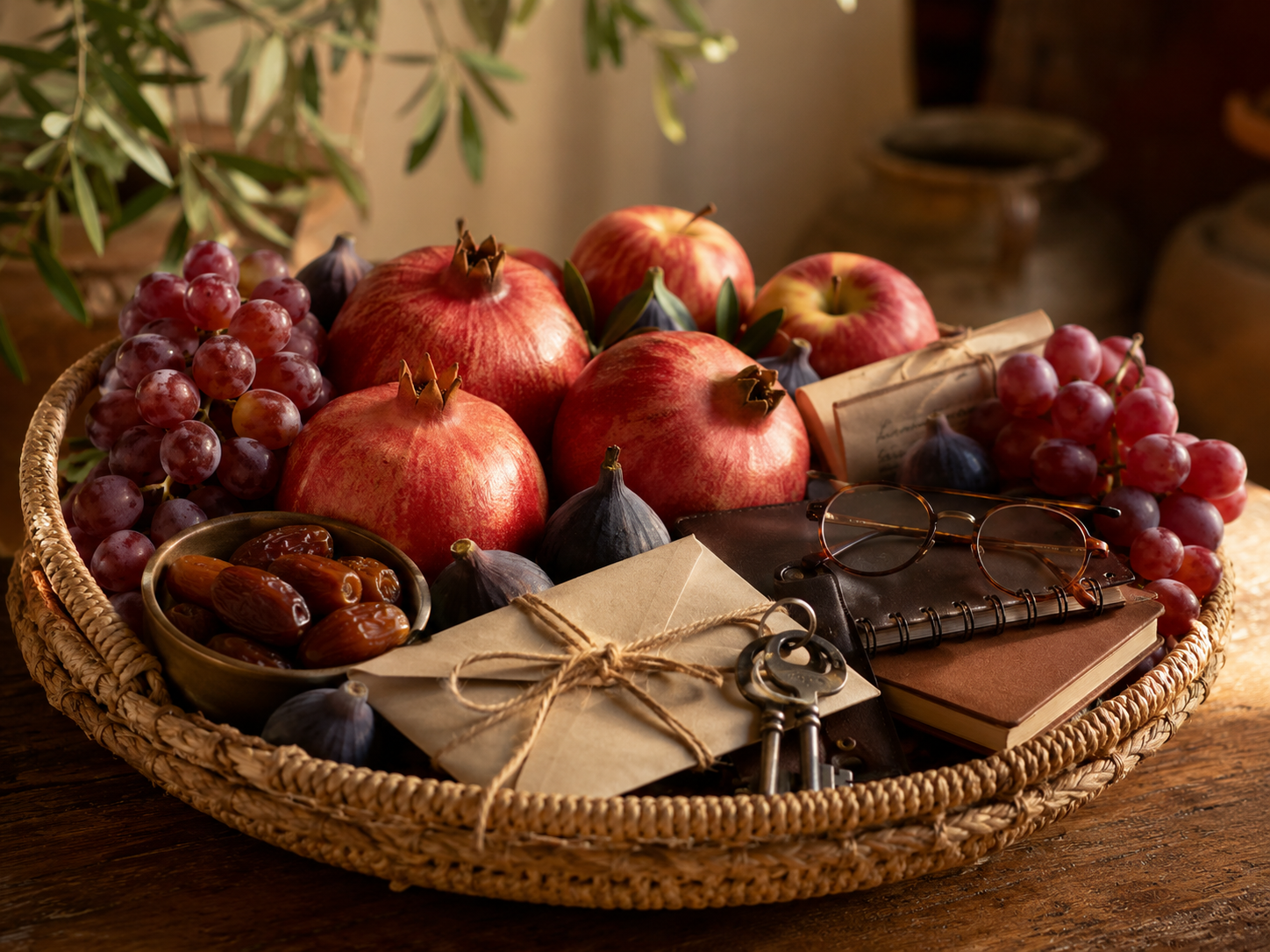
Parashat Ki Tavo begins with someone bringing the first fruits of the Land to the place HaShem will choose. It is a simple but powerful image: a person standing with a basket of produce, recognising that blessing has not appeared out of nowhere.
But the Torah does not let the moment stay as a private act of gratitude. The person bringing the offering has to tell the story: “My father was a wandering Aramean…” They speak about slavery, oppression, rescue, wilderness, and arrival. Before enjoying the Land fully, they have to remember the road that brought them there.
That is not always how we live. We often enjoy the fruit without thinking much about the roots. We inherit communities, traditions, opportunities, freedoms, and family stories, but can easily forget the sacrifices that made them possible. Jewish life did not simply fall into our laps. It was carried, protected, argued over, taught, rebuilt, and handed on by people who often had far less comfort than we do.
Ki Tavo insists that gratitude has to be connected to memory. It is not enough to say thank you in a vague sort of way. The basket is brought forward, and the story is spoken aloud. Not because HaShem needs the reminder, but because we do.
There is something very honest about that. When we name what we have received, we start to understand what it asks of us. Gratitude is not meant to make us sentimental. It should make us responsible.
The parashah also has a much darker side. Later, we hear the blessings and curses in language that is difficult to read. The Torah does not pretend that choices have no consequences. A society can be blessed, but it can also start to unravel. Usually not all at once. More often it happens quietly, through arrogance, neglect, injustice, and forgetfulness.
That is the uncomfortable warning running through Ki Tavo. Blessing can become entitlement if we are not careful. Once people begin to believe that everything they have is simply theirs by right, responsibility starts to fade.
Communities know this very well. A community survives because people give time, effort, money, patience, and care. It weakens when people assume it will somehow carry on by itself. Nothing meaningful continues for long if everyone quietly imagines that someone else will do the work.
Ki Tavo asks us to look at what we carry in our own baskets. Not just what we have achieved or received, but what has been handed to us. Who made it possible? What stories are we carrying? What responsibilities come with them? And what are we doing with them now?
Perhaps the challenge of the parashah is this: do not arrive and forget the road. Do not receive and forget to give. Do not enjoy the blessing while ignoring the responsibility that comes with it.
Because the basket is never only full of fruit.
It is full of memory, gratitude, and the question of what we choose to carry forward.