
Sefer Bemidbar begins with a profound silence that still speaks powerfully to the modern soul. As we open this new book of the Torah on the Shabbat before Shavuot, we find ourselves in the vast wilderness of Sinai. Bemidbar, meaning In the Wilderness, invites us to reflect on our own inner landscapes. How often do we feel as though we are wandering through a desert of uncertainty, searching for structure and meaning amid the chaos of modern life?
The parashah opens with a census, a careful counting of the Israelites. On the surface, this was practical preparation for entering Eretz Yisrael. Yet beneath the numbers lies a deeper spiritual truth. The sages teach that the counting demonstrated how precious each individual is. Every person stood before Moshe and Aharon, counted by name and recognised as indispensable to the nation. In an age dominated by statistics and division, this message feels especially urgent. Do we still see one another as infinitely valuable, or have we reduced people to categories and numbers?
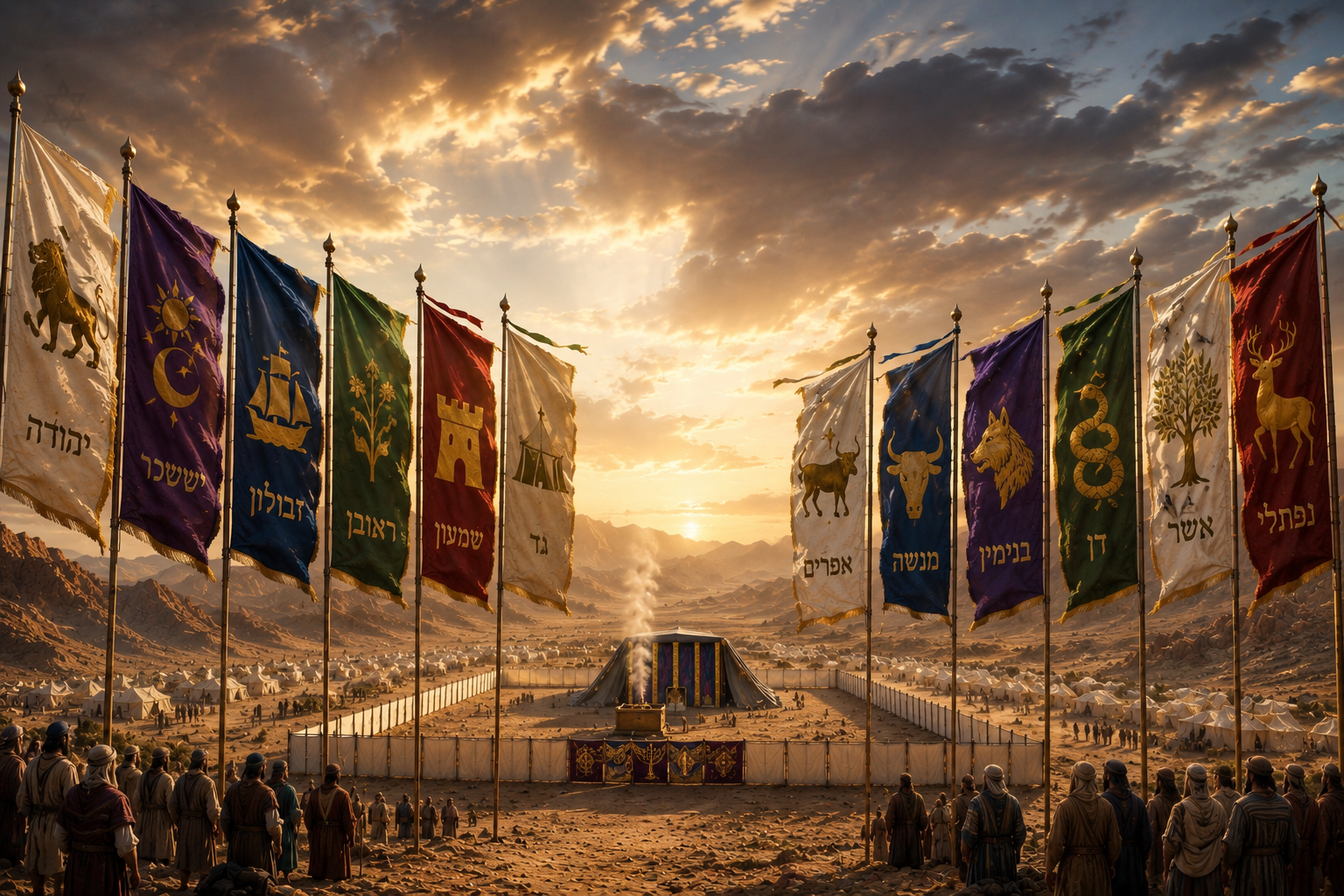
The arrangement of the camp was equally meaningful. The Mishkan stood at the centre, surrounded by the Levi’im, while the twelve tribes encamped around it under their own banners. Each tribe retained its unique identity and character, yet all faced the same centre. Bemidbar challenges us to ask whether we can preserve our distinct identities while remaining connected to a shared spiritual core. In the modern Jewish world, we are often divided by political loyalties, cultural differences, or varying levels of observance. Yet the parashah asks whether we can still see the Mishkan at the centre of the camp, celebrating diversity while recognising that our strength comes from a common source.
Maimonides suggests that the wilderness journey was necessary to transform a nation shaped by slavery into one capable of freedom. The generation that left Mitsrayim carried deep scars, and the desert became the place where a new national identity could emerge. This speaks directly to the heart of Zionism. The return to Zion was never merely geographic; it was about reclaiming responsibility for Jewish destiny after centuries of exile. The challenge remains before us today: are we building a society in Eretz Yisrael that reflects the holiness and moral vision we were meant to carry out of the wilderness?
The Talmud teaches in Tractate Eruvin that Torah can only truly be acquired by one who makes themselves like a wilderness. This striking image suggests openness and humility. If our hearts and minds are too crowded with ego or certainty, there is little room for the Divine voice to enter. Perhaps this is why we read Bemidbar just before Shavuot. Before receiving the Torah anew, we are asked to clear space within ourselves.
As a halachic and Zionist community, we must also wrestle with the tension between spiritual ideals and practical realities. The census portrays a nation organised for responsibility: prepared to defend itself, govern itself, and build a functioning society. Holiness in Judaism is not detached from ordinary life. It must shape how we build communities, treat one another, and uphold justice. As we prepare once again to stand at the foot of Har Sinai, we are reminded that the census is still ongoing. Each of us is called to stand and be counted. Every individual has a role that no one else can fulfil. Through our commitment to Torah, halachah, and Eretz Yisrael, we continue the journey together: distinct yet united, individual yet collective, moving steadily toward the society and spiritual home we are meant to build.