
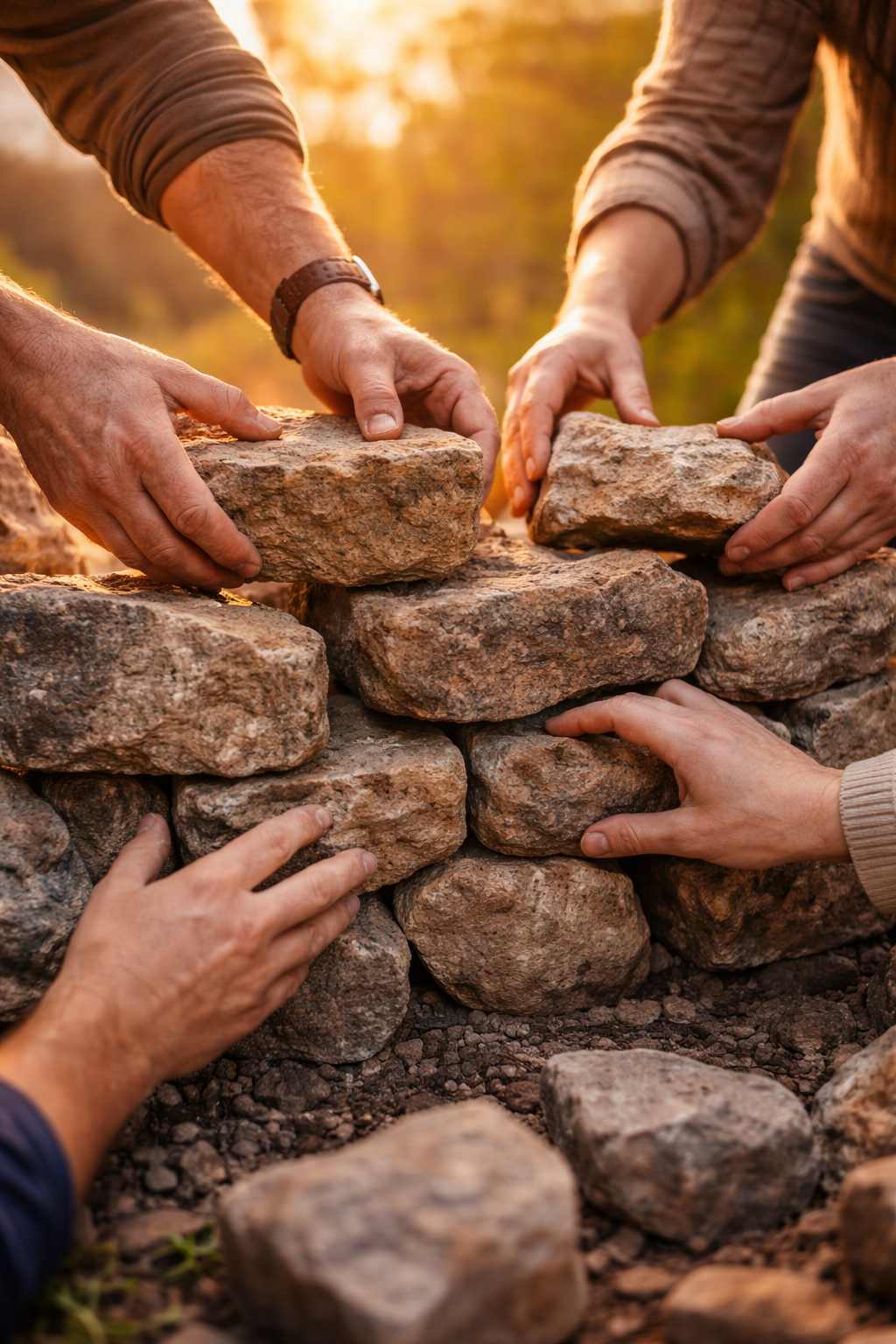
Parashat Terumah opens not with a command to obey, but with an invitation to care. The people are asked to contribute materials for the Mishkan, yet the Torah is precise in its language. The offering is taken only from those whose heart moves them. The first dwelling place of the Divine presence among the people is not created through obligation, but through willingness.
The sages noticed something subtle in the wording. The verse does not say give to Me, but take for Me. The Talmudic commentators explain that when a person gives for a sacred purpose, they are in fact receiving. Generosity reshapes the giver. The gold and silver mattered less than the inner transformation. Holiness begins when a person decides they are responsible for something beyond themselves.
The Mishkan was also not permanent. It travelled through the wilderness, carried by a people who were still uncertain, still learning how to live together. The Divine presence did not wait for stability. It accompanied growth. This teaches that sacred space is not found only in finished places, but in communities in the process of becoming.
That idea feels deeply relevant today. We often imagine holiness appearing once everything is secure, organised, and complete. Yet Jewish history rarely worked that way. Community has always been built while funds were tight, while people were busy, while plans were still forming. The Mishkan itself existed because individuals decided that what they had, however modest, could matter.
A community like ours stands on exactly that principle. Kehillat Or Tzion does not exist because of buildings or structures alone. It exists because people choose to take part. Some give time. Some give practical help. Some offer skills, organisation, or care for others. Some contribute financially so that services, learning, and support can continue. Each act is a plank in the sanctuary we are building together.
Terumah also pushes us beyond ourselves. The Mishkan was not only about one group’s comfort but about creating a space where the Divine presence could rest among people. Supporting wider charitable causes works the same way. When we help those in need, support relief efforts, or stand with vulnerable communities, we extend the walls of that sanctuary outward. The holiness we build is no longer confined to one room but becomes part of the wider world.
The parashah therefore asks a quiet but demanding question. Not what do you own, but what are you willing to offer. Not how much, but whether your heart is present. A sanctuary is never built by one grand gesture. It is built by many small decisions repeated consistently.
We may not stand in the desert surrounding the Mishkan, but the challenge remains unchanged. Each of us holds a piece of the structure. Through generosity, participation, and responsibility, we create a place where meaning can dwell among us.